Raheny Driving Test Routes – What to Expect, Common Fail Areas & Local Tips
If you're searching for Raheny driving test routes, you're probably trying to figure out where examiners bring learners, which junctions catch people out, and how to avoid easy fails.
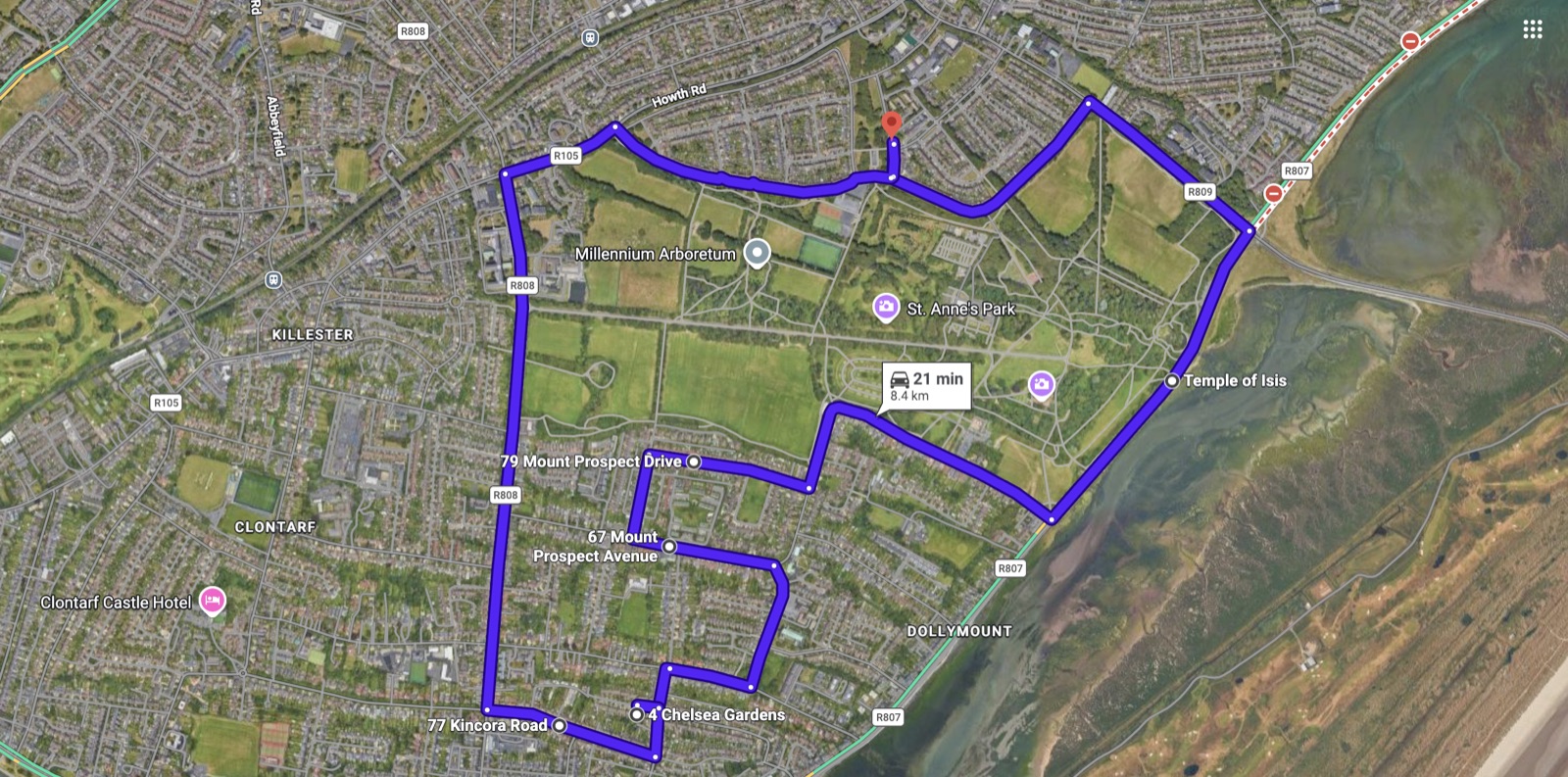
This page is built specifically for the Raheny RSA driving test centre in north County Dublin. It focuses on real local test patterns around Raheny village, Harmonstown, Kilbarrack, Donaghmede, Coolock, Clontarf edge roads and coastal routes near St Anne's Park — not generic advice.
Updated July 2026 based on learner feedback and local route observations.
We break down the actual roads examiners reuse, the junctions learners fail on most often, and the mistakes that repeatedly show up on Raheny test reports.
Reviewed by an Approved Driving Instructor (ADI) – Dublin. Updated July 2026 based on learner feedback and local route observations.
About the Raheny Driving Test Centre
The Raheny test centre serves learners from Raheny, Harmonstown, Kilbarrack, Donaghmede, Coolock, parts of Clontarf, Artane, and the wider north Dublin coastal corridor.
The driving environment here is mixed and challenging:
- Urban traffic through Raheny village and coastal commuter routes
- Dense residential estates with tight roads and parked cars
- Major distributor roads feeding into the city
- Coastal roads with changing traffic flow
- School-heavy zones with variable speed limits
- Older estates with narrow junction layouts
You will not get a simple estate-only route here. Tests regularly combine residential driving, heavy traffic roads, coastal stretches and busy signal-controlled junctions.
How Test Routes Work at This Centre
There are no fixed driving test routes in Raheny.
Examiners reuse the same connected road networks and loop patterns across north Dublin coastal suburbs.
Routes often:
- Leave the centre via local village roads
- Enter surrounding estates for manoeuvres
- Transition onto main roads such as Howth Road or Malahide Road
- Loop through coastal or distributor routes
- Return using alternate access roads
This centre tests your ability to adapt to changing environments. Memorising turns does not help. Knowing how traffic behaves on Raheny's roads does.
Core Areas Examiners Frequently Use
While Raheny RSA test centre routes vary, learners are commonly brought through:
- Howth Road (R105) — coastal commuter corridor
- Malahide Road (R107) — major north Dublin artery
- Raheny Road / Watermill Road village network
- Grange Road linking estates and main roads
- St Anne's Park perimeter roads
- Harmonstown Road
- Kilbarrack Road and Kilbarrack estate network
- Donaghmede shopping area access roads
- Residential estates around Edenmore, Springdale, Kilmore West, and Raheny Village estates
These areas form the backbone of north Dublin test route practice at Raheny.
Difficulty Overview by Area
| Area | Difficulty | Most Common Mistake |
|---|---|---|
| Howth Road (R105) | High | Hesitation joining fast-moving traffic |
| Malahide Road (R107) | High | Missing speed limit transitions |
| Kilbarrack Estate Network | Medium | Incomplete observation at exits |
| Raheny Village Junctions | High | Lane positioning under pressure |
| Donaghmede Access Roads | Medium | Pulling too far forward at exits |
| St Anne's Park Perimeter | Medium | Speed creeping on coastal stretches |
Roundabout Behaviour at This Centre
Roundabouts regularly catch learners out on Raheny driving test routes.
Large / multi-lane roundabouts
Found on distributor road intersections and access points to major routes.
Examiners look for:
- Correct lane selection early
- Mirror checks before lane changes
- Strong observation on approach
- Proper exit signalling
Common learner mistakes:
- Late lane positioning
- Drifting between lanes
- Hesitation at entry
- Failing to signal off
Smaller residential roundabouts
Seen inside estates near Kilbarrack and Donaghmede.
These test:
- Observation discipline
- Yielding properly
- Smooth approach speed
Many learners either over-brake or rush entry without full scanning.
Junction Types That Cause Fails
Hidden residential junctions
Common in older Raheny and Kilbarrack estates. Learners fail here due to:
- Rolling stops
- Incomplete left-right scanning
- Poor positioning when parked cars block visibility
Fast approach junctions
Found when joining Howth Road or Malahide Road. These test gap judgement.
Hesitation = fault. Unsafe entry = immediate fail.
Estate exits
Common near Donaghmede and Edenmore. Drivers often pull too far forward or fail to check blind spots.
Offset T-junctions
Present in older estate layouts. Learners misjudge priority and alignment.
Junctions after bends
Found near coastal roads and village connectors. Late braking and lane drift cause repeated faults.
Speed Limit Traps
Speed awareness is one of the most common fail causes at the Raheny RSA test centre. Typical traps include:
- Howth Road sections that feel faster than posted limits
- Malahide Road transitions between 50 and higher limits
- Residential roads that appear wide but remain 50 km/h
- School zones near Raheny village and Donaghmede estates
- Coastal stretches where drivers accidentally creep above limits
Why learners fail: they rely on road feel instead of signage. Examiners expect constant scanning and immediate adjustment.
Common Mistakes at This Centre
Repeated faults seen on Raheny driving tests include:
- Weak mirror checks before lane changes
- Late indicators on busy junctions
- Hesitation joining Howth Road traffic
- Poor lane positioning with parked cars
- Forgetting blind spot checks before moving off
- Over-braking at roundabouts
- Speed creeping above limits
- Inconsistent observation at estate exits
- Rushing manoeuvres under pressure
Most learners do not fail on one big mistake — they fail on accumulation.
Examiner Behaviour Patterns (Local Feedback)
Learners consistently report that Raheny examiners:
- Focus heavily on observation at junctions
- Watch mirror–signal order closely
- Are strict on speed compliance
- Expect confident but calm decision-making
- Penalise repeated hesitation
- Expect predictable, steady driving
They want safe routine driving, not aggressive or overly cautious behaviour.
High-Failure Locations / Hotspots
Based on repeated learner feedback from the Raheny test centre:
- Howth Road junction access points
- Malahide Road merge areas
- Raheny village traffic-light junctions
- Kilbarrack estate exits
- Donaghmede shopping area access roads
- Coastal road intersections near St Anne's Park
These spots combine traffic pressure, speed changes and visibility challenges.
Test Day Flow at This Centre
Leaving the centre
You usually exit onto village roads. Early mirror checks and clean positioning matter immediately.
Early test pressure points
Expect busy junctions and lane changes quickly. This often sets the tone of the test.
Mid-test environment
Residential estates are commonly used for manoeuvres. Expect reverse around corner, turnabout or hill start combined with tight observation requirements.
Final section
Routes usually return via main roads or coastal connectors. Learners often relax too early here and pick up avoidable faults on speed or signalling.
Local Preparation Tips
- Practise Howth Road and Malahide Road junction entries repeatedly
- Drive Raheny village area at different times of day
- Practise manoeuvres inside Kilbarrack and Donaghmede estates
- Train positioning on narrow parked-car roads
- Drill mirror–signal routines until automatic
- Practise speed transitions deliberately
If your practice feels repetitive, you're doing it right.
Also preparing for nearby centres? Check our Killester driving test routes or browse all Dublin test centre routes.
What Learners Say
"Practising Howth Road entries was the best thing I did. The examiner brought me straight onto it within two minutes of leaving the centre." – Raheny test candidate, March 2026
"I failed my first test on accumulation of faults around Kilbarrack estates. Passed second time after practising estate exits properly." – Raheny test candidate, January 2026
Trust & Credibility
- Based on learner feedback from Raheny test candidates
- Used by learners preparing locally across north Dublin
- Updated July 2026 based on route observations and learner reports
- Designed specifically for Raheny RSA route patterns
- Built around real north Dublin coastal road layouts
- Reviewed by an Approved Driving Instructor (ADI) – Dublin
FAQ – Raheny Driving Test
How long is the Raheny driving test?
Usually 35–40 minutes, including vehicle checks and manoeuvres.
Are routes fixed at Raheny test centre?
No. Raheny uses multiple routes that reuse the same core road networks. Examiners vary the route each time.
What roads are used in the Raheny driving test?
Examiners most commonly use Howth Road (R105), Malahide Road (R107), Raheny Road, Grange Road, Kilbarrack estate roads, Harmonstown Road, Donaghmede access roads, and coastal roads near St Anne's Park.
Is Raheny test centre considered difficult?
Raheny is considered moderately challenging due to traffic density, coastal routes, complex junctions on Howth Road and Malahide Road, and the mix of residential and main road driving.
Where do Raheny examiners usually go?
Routes typically leave via village roads, move into residential estates for manoeuvres, transition onto main distributor roads like Howth Road or Malahide Road, and return via coastal or alternate routes.
Can you fail for hesitation in Raheny?
Yes. Repeated hesitation — particularly joining Howth Road or Malahide Road — is one of the most common accumulated fault patterns at this centre. Examiners expect confident but safe gap judgement.
What manoeuvres are done in Raheny?
You can expect reverse around a corner, turnabout (three-point turn), or hill start. These are typically carried out in residential estate roads around Kilbarrack or Donaghmede.
What is the best time to practise Raheny routes?
Practise at different times of day. Howth Road and Malahide Road traffic patterns change significantly between morning rush hour, midday, and school run times. Getting comfortable in varied conditions prepares you for test day.
Can I practise realistic routes before my test?
Yes. You can practise realistic Raheny route patterns that reflect real examiner behaviour and test layouts using our Google Maps route guides.
What is the best way to prepare for the Raheny driving test?
Drive the area repeatedly. Practise main road entries, estate exits, roundabouts and speed transitions until they feel routine. Focus especially on Howth Road junction entries — they catch more learners out than anywhere else on this test.